
Shipping Springs from China to Russia: Lead Times, Routes, Cost
Comparing road, rail and sea for shipping springs from China to Russia: lead times, consolidated and container shipments, customs documents and door-to-door cost drivers.
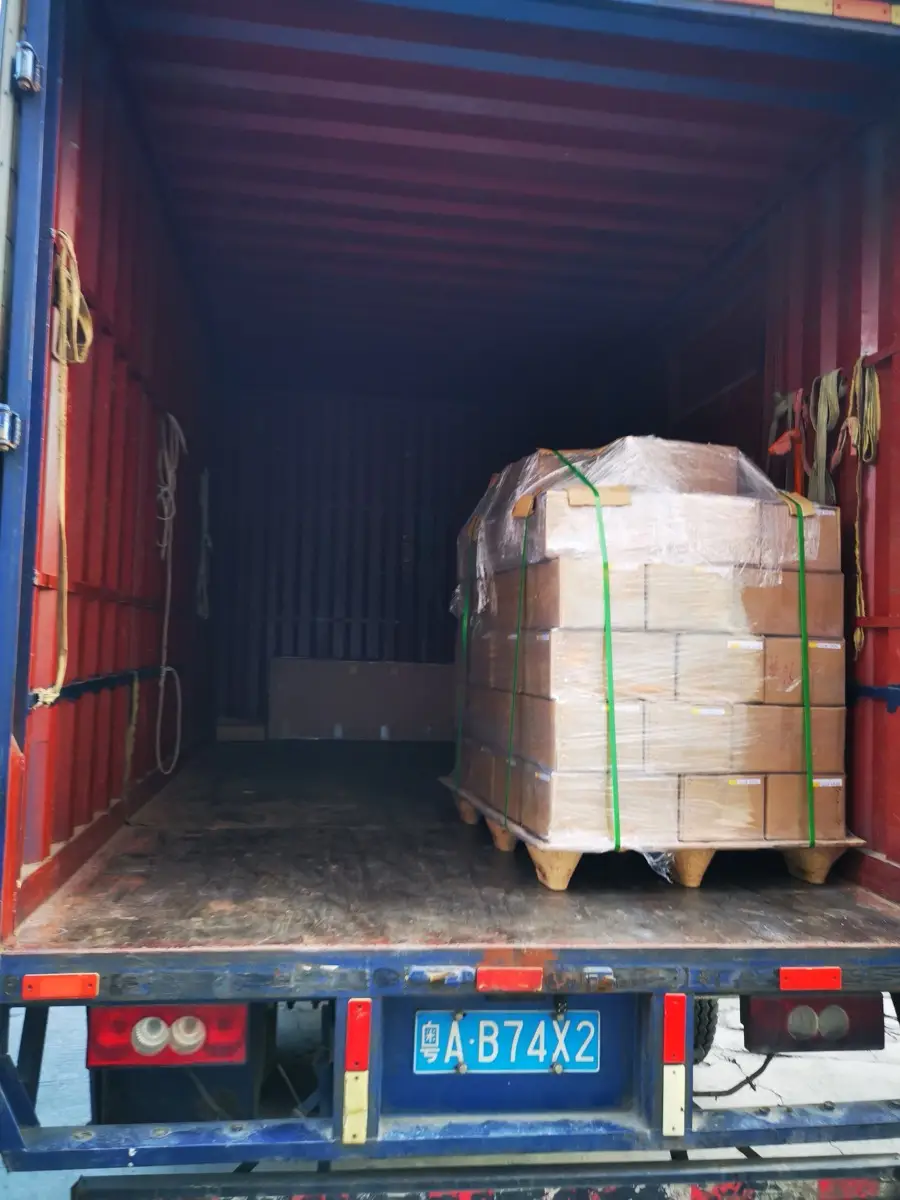
“How long does cargo take from China?” is the first question in almost every inquiry — often before the question about the spring itself. That is logical: for maintenance services and manufacturers, the lead time for spare parts matters more than a few cents of price. In 2026, China–Russia logistics has become more predictable by rail, but more expensive and less stable by sea, and the choice of delivery scheme noticeably affects the total cost of a batch.
We have been exporting springs since 1979 — today to more than 40 countries, including Russia and Kazakhstan. Below is a working picture of the three delivery methods, lead times, documents and the door-to-door calculation. We deliberately do not quote prices in this article: the cost depends on the batch and its dimensions, and any specific figure “in an article” goes stale faster than the article is published.
1. Three delivery methods: road, rail, sea
For spring shipments from China to Russia, three schemes really work, each with its own niche:
| Method | Approximate lead time | What it suits | Key feature |
|---|---|---|---|
| Road (FTL, consolidated cargo) | 14–20 days | Trial batches, medium volumes | Flexible dates, delivery “to the warehouse”, simple transloading |
| Rail | 12–18 days via Kazakhstan | Serial batches, heavy springs | Predictable schedule, stable rates within a quarter |
| Sea (container) | 40–50 days to port + overland leg | Large and heavy batches, planned supplies | Lowest cost per kilogram at high weight |
Note that a “lead time” only makes sense counted door to door, not to the border or the port. The difference between arriving in Vladivostok and arriving at a warehouse in Yekaterinburg or Moscow is another 7–15 days of overland leg — and that is usually where the gap between the carrier’s promise and reality comes from.
2. Rail: 12–15 days and why the Kazakhstan route got faster
The base scenario for serial batches in 2026 is a container train on the China — Kazakhstan — Russia route. According to industry media, the load on this direction has grown noticeably in 2026: the leg via Kazakhstan (Dostyk or Altynkol — Khorgos), with further gauge change and dispatch across the RZD network, takes about 12–15 days to major hubs, and new services such as the direct Wuhan — Ulyanovsk route run around 15 days.
Why did the Kazakhstan route get faster? Three reasons:
- Infrastructure. According to industry media, border-crossing capacity continues to expand — including a second “standard-gauge” track project designed to add up to 11 million tonnes of cargo per year by 2030.
- Traffic distribution. Part of the flow moved off the classic route through Zabaikalsk, and the queue at the busiest crossing has shortened — although RZD management has publicly said that all major rail crossings are running at full capacity.
- Service schedules. Container trains run on a fixed timetable, and within a quarter the rate and lead time are more predictable than on sea lines.
An honest caveat about the season: in peak periods (Q4, pre-holiday windows), queues at the gauge-change point are possible — carriers estimate waiting of up to 7–14 days. This is not a “delivery failure” but a property of the route, and it should be built into the procurement plan rather than discovered after the fact.
3. When sea is the better deal: large batches and heavy springs
Springs are heavy cargo: transport cost is calculated by weight and volume, and for large batches weight quickly becomes the main parameter. Large hot-coiled springs (up to 80 mm wire at our factory, developed length up to 18 m) take up volume in packaging and weigh from hundreds of kilograms to tonnes — and here sea freight gives the lowest cost per kilogram.
A typical sea scenario: a container to a Far East port (Vladivostok, Vostochny) or Novorossiysk, then an overland leg across Russia. Roughly 40–45 days at sea alone, plus the overland leg — so plan realistically for 50–60 days door to door to the European part of Russia.
Important 2026 context: Far East ports periodically work with congestion, and rates on the Korea — Far East direction have grown noticeably within two months (up to +40% according to industry media). So “sea is always cheaper” is no longer an axiom in 2026: for medium-weight batches, rail can turn out to be both faster and comparable in cost. Both options need to be calculated.
The rule of thumb we recommend: planned serial batches of heavy springs — sea, with lead-time buffer; batches for repairs and fleet recovery — rail or road.
4. Consolidated and container shipments: what to choose for a trial batch
The classic sequence of a first deal: calculation and quotation → prototypes → testing → trial serial batch → planned supplies. Each stage has its own logistics:
- Prototypes. After the drawing is approved, we produce prototypes within 48 hours. Then two options: urgent prototypes go by air freight (expensive per kilogram, but justified when a machine is down), regular ones — consolidated road or rail cargo, 14–20 days door to door.
- Trial batch. Consolidated cargo (LCL) is optimal: you pay for the volume actually occupied, not for a whole container. For a batch of 100–500 kg this is usually the most economical scenario.
- Serial supplies. From 2–3 pallets and up, it makes sense to price a full container (FCL): the rate for a whole container is almost always cheaper than the consolidated tariff, plus fewer transloads — lower risk of packaging damage.
A separate word about packaging — for springs this is not a detail: large springs ship in wooden frames and cradles with coil fixing, medium ones — on strapped pallets with moisture protection. Poor packaging on a route with 3–4 transloads is the most common cause of claims that have nothing to do with the factory.
5. Customs clearance and shipment documents
Customs value and correct clearance depend on the document package prepared by the factory. The standard set for every batch:
| Document | What it is used for |
|---|---|
| Commercial invoice | Basis of customs value: name, quantity, price |
| Contract and specification | Confirmation of the transaction for the bank and customs |
| Packing list | Verification of packages, weight and volume at inspection and acceptance |
| Material certificate | Traceability of the spring steel to the heat |
| Test reports | Confirmation of characteristics (force–deflection, hardness) |
| Product data sheet | Identification of the batch and its parameters |
Springs are classified under TN VED heading 7320 (springs of iron or steel) — a position every customs officer understands as general industrial use. The key practical rule: the product name must match verbatim across all documents — in the contract, the invoice and the declaration. We covered import and certification requirements in detail in our EAC certification article, and payment schemes and bank documents in the payments article.
For delivery terms, FOB or CIF (the factory is responsible to the port/border) or DAP (delivery to your warehouse through our forwarder) are the most common Incoterms. For a first deal we usually recommend DAP: the buyer gets a door-to-door price and does not coordinate customs in the country of export.
6. An approximate door-to-door calculation and what it depends on
No article can give you an exact door-to-door figure — but an honest calculation is always built from the same parameters:
- Weight and volume of the batch. The main price driver. Springs are dense cargo, and at high weight the “sea vs rail” difference can be multiples.
- Packaging dimensions. Long and oversized items affect the choice of rolling stock and the number of transloads.
- Destination city. The leg from the port or border crossing to the warehouse is a separate cost item, sometimes comparable to the international leg.
- Delivery basis (Incoterms). FOB, CIF and DAP include different sets of services in the price — they cannot be compared head-on.
- Season. Q4 and pre-holiday periods mean queues at transloading and rising rates; build in a 1–2 week buffer.
- Insurance. For heavy and expensive batches, cargo insurance costs incommensurably less than a potential loss — we always recommend it.
As of the 2026 market: according to industry media estimates, total cross-border logistics costs on the China — Russia direction have grown by an average of 10–20% depending on the route. That is one more reason to calculate delivery together with the order, not after it: sometimes changing the port of export or the scheme (consolidated vs container) saves more than a discount on the springs themselves.
A logistics calculation request with us looks simple: you name the destination city and the deadlines, and after calculating the batch we send a quotation with the spring price and delivery options (rail, road, sea) with approximate lead times for each. All batch parameters — weight, volume, packaging type — we calculate ourselves from the drawing.
More about the factory is on the About page; hot-coiled large springs are in the Products section.
Delivery is part of the spring’s price, not a separate world. When the scheme, lead time and documents are agreed before the contract, the cargo moves along the route as predictably as a spring passes a load test.
Planning a batch and want to understand the door-to-door lead time and cost in advance? Send the destination city, the approximate volume and the desired date — a factory engineer will prepare a calculation with route options. Fast contact: the Telegram bot @xulong_ru_inquiry_bot, or send your request via the form on the Contacts page.
Need a calculation for a specific part? Send a drawing or describe the duty conditions of the assembly — a factory engineer will prepare an offer. Contact: info@xulong-pruzhiny.com.