
MOQ When Buying Springs from China: How It Forms and What to Negotiate
Why spring makers set a minimum order, what shapes MOQ for different spring types, how it relates to unit price, and which questions to ask before signing the contract.
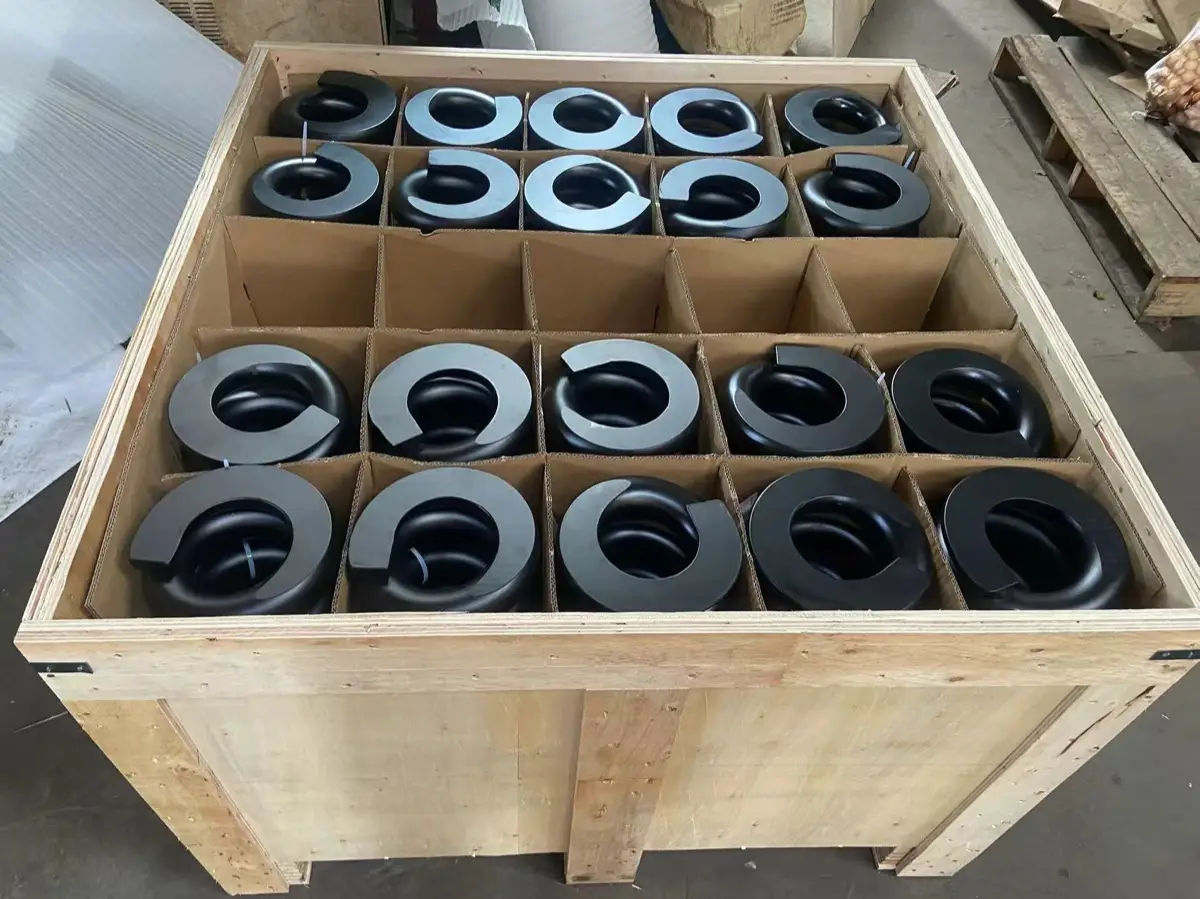
When a buyer sends a first spring inquiry to a Chinese manufacturer, one of the first questions in the reply is almost always the same: “what volume do you need?” Minimum order quantity — MOQ — is the topic surrounded by the most misunderstanding between buyers and factories. To the buyer, it looks like the plant “simply can’t be bothered with a small order”; to the factory, it looks like the buyer doesn’t understand what a production run actually costs to set up. The truth, as usual, sits in the middle: MOQ is not a whim but a consequence of the physics and economics of manufacturing. Understanding this logic before the first inquiry pays off — comparing suppliers gets easier, the cost picture gets more honest, and the contract stage holds fewer surprises.
In this article: how MOQ forms in spring manufacturing, what shapes it for different spring types, how MOQ relates to unit price, why a trial batch and a series batch are two different things, and which questions to ask a supplier before signing a contract.
Why spring manufacturing has an MOQ in the first place
A custom spring is not a stock item — it is a product manufactured to a specific drawing. Every order carries several “unavoidable setup costs” that do not depend on whether you order 50 pieces or 5,000:
- Machine setup. A coiling machine is configured for a specific wire diameter, pitch and coil height; setup, trial coils and the first controlled coil take the same time regardless of order volume.
- Heat treatment. A furnace is loaded by batch: the tempering or hardening regime holds for the entire charge. A small batch occupies the same furnace and the same cycle as a large one.
- Material. Spring wire and bar are purchased from steel mills in standard coils and lengths. If your drawing requires an uncommon diameter or grade, the mill’s own minimum purchase becomes the lower bound of the batch.
- Inspection and documentation. Test bench setup, test protocols, batch traceability — these are performed per batch, not proportionally per piece.
Add these four lines together and it becomes clear why “just 20 springs to a drawing” is disproportionately expensive per piece for a plant with full heat treatment and inspection. MOQ is the point below which launching a batch stops making economic sense for both sides.
What shapes MOQ for a specific order
There is no “one MOQ for the whole catalogue”: for different spring types, different factors set the minimum. Here is the summary:
| Factor | How it affects the minimum order |
|---|---|
| Spring type and wire diameter | Fine wire and cold coiling are flexible on volume; heavy hot-formed bar requires a furnace, a charge and dedicated tooling — larger batches |
| Material | Common standard diameters come from factory stock; a rare grade or diameter goes under procurement from a steel mill, and the minimum batch follows the mill’s terms |
| Heat treatment and coating | Tempering, hardening, shot peening, zinc plating and other coatings run in batches — their multiples set the lower bound |
| Precision and inspection | Tight tolerances and load testing of every group raise the share of preparatory work — the economically sensible volume grows |
| Packaging and marking | Individual coil packaging, wooden crates, English- or Russian-language marking — rational above a certain volume |
The practical conclusion: don’t ask a supplier “what is your MOQ” — ask “what minimum volume is realistic for my part numbers”, with the drawing, material and inspection requirements attached. The same factory can flexibly take a small order on a common size from stock material and, at the same time, quote a considerably larger batch for a rare bar grade destined for hot coiling.
Trial batch vs series batch: two different MOQs
The second common mistake is confusing the minimum order for a production run with the volume of a trial batch. A sound procurement chain looks like this:
- Calculation and quotation — based on a drawing or measurements; the supplier confirms manufacturability and proposes material and design.
- Samples — once the drawing is approved, sample production takes 48 hours; their purpose is verification in your assembly or on your test rig, not commercial operation.
- Trial (pilot) batch — a volume between samples and the series, on which you check process stability: repeatability of spring rate, coating quality, packaging performance.
- Series batch — with the full economics of a production run, test protocols and planned inspection.
Samples and a series batch are different production regimes, and their minimum volumes differ. Ask the supplier for both figures separately: first, what is needed to make samples for your drawing; second, from what volume a series batch becomes economically viable. If a supplier quotes a single MOQ figure without separating the regimes, that is a reason to ask follow-up questions — how they plan to control the process between samples and series.
A separate case is restocking an already qualified part number. If the drawing, tooling and process parameters are already proven (the familiar “repeat order to the previously approved specification”), the lower bound of the batch is usually noticeably softer than at first launch: setup is faster, material is already on the stock schedule, inspection follows an established procedure. It is worth raising this at the first contract — so that the schedule of future deliveries doesn’t run into unexpected minimums.
How MOQ relates to unit price
The relationship is inverse, and understanding its mechanics is more useful than any specific numbers — every factory has its own, and they move with materials and exchange rates. The logic: setup costs (machine changeover, furnace charge, inspection) are spread across the batch volume. The larger the batch, the smaller the share of these costs per spring — and the closer the unit price gets to the “clean” cost of material and machine time.
Three practical consequences follow:
- Ordering below the minimum volume is always more expensive per piece — sometimes several times over. If a supplier accepts a small batch without changing the price, ask what they are compensating with: often the inspection scope or documentation is reduced, and that is a different, less transparent deal.
- Ordering “with a margin” is not always cheaper. Buying twice as much as needed for a lower unit price means freezing cash in stock and adding logistics costs; for repair and spare-part positions, a stock-level calculation usually yields a more sober volume than the intuitive “let’s take extra”.
- A batch is also a schedule. A large bill of sizes is often better split into agreed delivery tranches: the total volume keeps the economics of a series, while cash and warehouse space are not frozen all at once.
We deliberately give no price figures in this article: when ordering from China, price depends on material, volume, design and logistics, and any number outside a specific drawing misleads. The principle, however, is stable: compare suppliers not by “price per piece” but by structure: what the batch price includes, where the minimum-volume boundary sits, and how it shifts between a trial and a series delivery. We broke down what the price of a custom spring consists of in a dedicated article, and payment arrangements with a Chinese factory in a separate piece.
What to ask a supplier about MOQ: a checklist before the contract
Based on our experience with equipment buyers, these are the questions worth closing before the contract is signed — exactly the points that most often surface “suddenly” after the price has been agreed:
| Question | Why ask |
|---|---|
| MOQ separately for samples and for the series | Samples and a production launch are different regimes; one “general” figure almost always hides details |
| Minimum volume per line of the technical specification | A bill of five sizes means five batch logics, not one |
| Material linkage: from stock or under procurement | It determines lead time, the lower batch bound and the risk of grade substitution |
| Multiples of heat treatment and coating | The batch may have to be a multiple of a furnace charge or a coating bath |
| Can the batch be split into delivery tranches | It affects cash freeze, warehouse load and acceptance scheduling |
| What the batch price includes: inspection, documents, packaging | Test protocols, product passport, marking in your language must be in the contract, not “by arrangement” |
| Repeat orders of a qualified position | Fix repeat-batch terms up front so they are not renegotiated retroactively |
| What happens when a batch needs topping up (add-ons, rejects, adjustments) | Agree the procedure for small top-up volumes in advance |
And one piece of advice that covers the whole list: get answers tied to a drawing. An inquiry that includes a drawing (or measurements of a removed spring), material, operating conditions and inspection requirements receives a concrete batch calculation from the factory; a request for “the price of a spring and your MOQ” without data receives either an average figure or silence.
How we approach minimum orders
Our factory has been operating since 1979 and produces springs with wire diameters from 0.1 to 80 mm — from cold coiling of fine wire to hot coiling of bar with a developed length of up to 18 meters; series capacity is 900 tons of springs per month. Batches across this range are by definition different: an order for return springs of an assembly and an order for support springs of a vibrating screen carry different launch economics, and we have no unified “MOQ figure for everything” — the minimum volume is confirmed against a specific drawing, material and inspection requirements. The principles, however, are the same for every order:
- 48-hour prototyping after the drawing is approved — you verify samples in your assembly before confirming the series;
- load testing from 50 N to 60 t on six in-house test stands — a batch is accepted against measured characteristics, not “by eye”;
- IATF 16949:2016 quality system (includes ISO 9001:2015 requirements, Intertek certificate №0495241) — process discipline at the level the automotive industry demands;
- batch documentation — test protocol, product passport, material certificate, packaging and marking in your language.
If you are planning a spring purchase from China and want to understand in advance the realistic batch volume for your parts list — send a drawing, measurements or photos of a removed spring to our Telegram bot @xulong_ru_inquiry_bot (files can be attached directly in the chat) or fill in the form on the contact page. An engineer will come back with a breakdown: sample volume, the economically sensible series volume, options for splitting into tranches — so you can plan the contract on data, not assumptions.
Need a calculation for a specific part? Send a drawing or describe the duty conditions of the assembly — a factory engineer will prepare an offer. Contact: info@xulong-pruzhiny.com.