
How to Vet a Spring Supplier in China: Certificates and Questions
How to vet a spring supplier in China: which documents to request before payment, how to verify a certificate, eight questions for the factory, seven red flags.
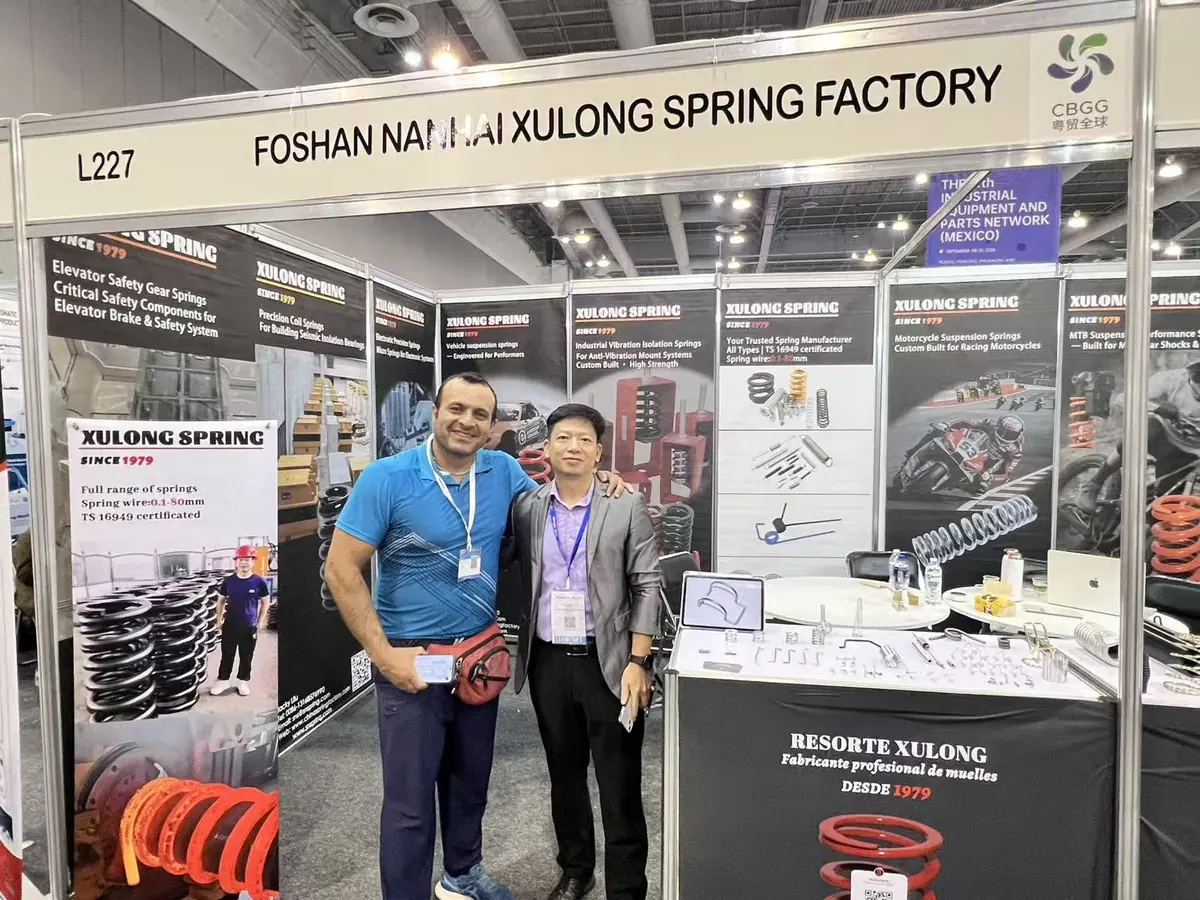
Choosing a spring supplier is one of those decisions where the cost of being wrong far exceeds the price spread between quotations. A batch delivered with a rate deviation, without test reports, or backed by a certificate “for the wrong product” turns into downtime, rework and disputes that outlast the deal itself. Meanwhile, on the surface everything looks alike: websites, catalogues and even workshop photos.
This article is a working vetting scheme for a procurement manager or business owner selecting a Chinese factory for custom springs — from a one-off batch to series supply. We walk through three levels of verification — documents, production, first samples — list the documents to request before the first payment, show how to read a certificate, and give you eight questions that reveal a supplier’s level within a single round of correspondence. At the end: seven red flags and the logic of a trial order.
One scope note: this article is about vetting the manufacturer as a counterparty. Requirements for the springs themselves — geometry, material, tolerances, acceptance — are separate topics covered in our articles on drawing parameters and on quality control with load testing.
Three levels of verification: documents → production → first samples
It helps to hold supplier verification in your head as a sequence of three levels. Each next level costs more than the previous one, so the order matters: start with what can be checked by correspondence, then what takes time or a site visit, and only then what is checked with money — a trial order.
| Level | What is checked | Which question it answers | What it cannot show |
|---|---|---|---|
| Documents | certificates, scope of application, test reports, licences | does a quality management system exist, and who is behind it | whether that system actually runs on your order every day |
| Production | equipment, test facilities, process, people | whether the factory can physically make your type of spring | how the batch will be accepted and documented |
| First samples | a trial batch against agreed criteria | whether the real product matches the promise | long-term consistency of series supply |
The guiding principle: no level substitutes for another. A factory with an impressive certificate but no test facilities, and a factory with a great workshop but no documentation discipline, are two different scenarios of future trouble. Verification counts as passed only when all three levels give a consistent answer.
Which documents to request before the first payment
For a factory bidding to supply springs to drawing, the minimum document package is five items. Request them before price negotiation, not after: the completeness and quality of the response is diagnostic in itself.
| Document | What it confirms | What to look at |
|---|---|---|
| Quality management system certificate | existence of a certified QMS | whose name is on it, scope of application (product types, processes), validity period, issuing body |
| Material certificates (per batch) | origin and grade of the wire or bar | grade matches your order, heat/batch reference, issued for each batch, not “once” |
| Test reports | actual measurements on the product | which parameter, on which equipment, whose signature; a report for your spring type, not a template |
| Batch passport / accompanying documents | traceability of release | batch number, date, QC release mark, packing list with contents |
| Company details and contract package | who is the contracting party | full legal name of the manufacturer, payment account in the company’s name, not a third party’s |
The detail most often missed is the scope of application of the certificate. A QMS certificate may cover, say, suspension components production, while you are ordering large hot-coiled springs — formally the document exists, but it has nothing to do with your product. So always ask for the scope sheet together with the certificate copy, and check the match against your product type.
The second common miss is material certificates “per batch”. An answer like “we have a wire certificate” without a heat number and delivery date gives no traceability: you cannot tell the coil your springs were made from from any other. For critical assemblies, fix this requirement in the order in advance.
How to verify a certificate: registry, scope, match with the product
A glossy certificate copy proves nothing by itself: what you verify is not the paper but three facts — that the document exists, what exactly it confirms, and whether that matches your product.
Existence. Quality management system certificates and conformity documents for the EAEU market are checked through the official registries of the issuing bodies — by certificate number and holder name. “The certificate can be verified in the official registry” is a standard expectation from any supplier: if a factory cannot name the issuing body or the number, that is an answer in itself.
Content. Look at four fields: the holder’s name (it must match the legal entity you sign the contract with), the scope (product types and processes), the validity period, and the certification body. A mismatch between the certificate holder and the contracting party is a typical situation with trading companies renting someone else’s “factory status”; it is not always deception, but you should know who exactly you are vetting.
Match with the product. A separate matter is market conformity. A QMS certificate confirms process maturity, but it does not replace product conformity documents for a specific country. For deliveries to Russia and the EAEU this is its own subject with its own rules: what has changed and what it means for the buyer is covered in detail in our article on EAC certification for springs. The practical takeaway for vetting: don’t ask “do you have certificates at all” — ask “which conformity documents do you arrange for a product of my type, and who acts as the holder”.
One organisational question belongs at this same stage: who will be the contracting party and who is responsible for conformity documents — the manufacturer or its partner. Both arrangements exist in the market and both can work, but from the outset it must be clear who carries the warranty obligations to you and who answers for the batch in a dispute. Unclear roles here are not grounds for rejection by themselves, but they are grounds for fixing the roles in the contract in writing before the first payment.
Eight questions for the factory that reveal its level immediately
Documents cover the system, but springs are made by people and machines. The eight questions below are phrased so that they cannot be answered with generalities: each one requires the factory to name specific equipment, a number, or a process. Send them in a single email and grade the completeness of the reply — it is the cheapest audit there is.
| # | Question | What the answer shows |
|---|---|---|
| 1 | What is the maximum wire/bar diameter you coil, and from what diameter does hot coiling start? | the factory’s real process range, not “any springs”; knowing the cold/hot boundary is a specialist’s mark |
| 2 | Do you have shot peening, and for which springs do you apply it? | understanding of fatigue strength; peening marks factories working with dynamically loaded assemblies |
| 3 | What equipment do you test springs on, and over what load range? | the test base: stands, range, ability to accept a batch by load rather than “by eye” |
| 4 | Do you hold tooling for common diameters, and how is tooling made for a new order? | launch speed and cost; in-house toolmaking versus buying outside |
| 5 | What does your lead time consist of — which stages? | command of one’s own process: coiling, heat treatment, peening, inspection, packing, logistics — stage by stage, not “7–15 days” |
| 6 | How do you pack large springs for sea and rail transport? | attitude to preservation: wooden crates, coil restraint, separator layers — a frequent damage point |
| 7 | How is batch traceability ensured, from material heat to packing? | documentation maturity: part marking, batch passport, report archive |
| 8 | Who performs fatigue testing if the assembly is critical? | honesty about limits: few factories own fatigue rigs; a proper answer is an independent laboratory under an agreed programme |
Note question #8: the answers here are diagnostic in both directions. A factory promising “any tests in-house” and a factory that doesn’t understand the question both deserve caution. For critical assemblies the workable option is testing to an agreed programme at an accredited laboratory, with a report per batch.
And the general evaluation criterion: a strong factory asks questions back. If the reply to eight questions contains not a single counter-question about the environment, duty cycle or installation of the spring — you are likely talking to a marketplace, not a manufacturer.
Red flags: seven signs it is time to look for another supplier
None of the signs below is a crime in itself, but each statistically leads to trouble at execution stage. Two or more together — and the money-saving move is not negotiation but moving to the next candidate.
- A certificate without a scope sheet or without the holder’s name. “We’ll send a copy after the deposit” — stop signal: document verification precedes payment, not the other way round.
- One material certificate “for everyone”. Refusal to issue a material certificate with a heat reference for your batch closes the path to traceability and to any future claim.
- Instant price without clarifying questions. A quotation sent an hour after the drawing, with no questions about duty cycle, environment or tolerances, means the price was computed by weight, not by the product.
- No in-house test facilities. If the factory cannot name the equipment used to accept a batch by load and reference the reports, batch quality is left to chance.
- Certificate holder ≠ contracting party. The contract is proposed with a company whose name matches neither the certificates nor the factory — you lose the link between the documents and the manufacturer.
- Vague responsibility for packaging and logistics. “Standard packaging” without a description of crates for large springs is a predictable story of transit damage and a dispute over where it happened.
- No named engineering contact. Every question goes into a group chat or to a manager who answers technical questions with “I’ll check with the factory”. Over a series, this means there is no engineer between you and the machine at all.
A trial order as the final check: samples → pilot batch → series
The three levels of verification end with the only one that cannot be passed by correspondence — the trial order. Its logic is simple: first samples made to an agreed drawing, then a pilot batch accepted against criteria written down in advance, and only then the series.
| Stage | What is checked | How to fix it |
|---|---|---|
| Samples | geometry, material and rate match the drawing | drawing agreed before launch; sample measurements against the drawing |
| Pilot batch | process stability: spread within the batch, document package | acceptance criteria written into the order in advance: load at specified height, tolerances, document set |
| Series | reproducibility from batch to batch | batch passport, reports per batch, marking and traceability |
Decide in advance what counts as a successful completion of each stage. For samples: measurements against the drawing over an agreed parameter list. For the pilot batch: load acceptance with the criterion written into the order before manufacturing. For the series: repeatability of documents from batch to batch. Without fixed criteria even a good batch gives you no basis for comparing suppliers with each other — the argument degrades into impressions.
A practical timing reference: a request with a complete data set is calculated by us within 24 hours; to an agreed drawing we manufacture samples in 48 hours, and only after the samples are confirmed does the pilot batch and the series start. Note that samples are part of the verification, not a complimentary giveaway; their cost and how they count towards the order are discussed openly — and that, too, is a diagnostic: a supplier with nothing to hide discusses the structure of a trial order calmly.
Here is how it looks on our side. The factory has been operating since 1979; the coiling range is 0.1 to 80 mm, from cold-coiled precision wire to hot coiling of bar with a developed length of up to 18 metres; series capacity is 900 tonnes per month. Load testing runs on stands from 50 N to 60 tonnes, so both a small assembly spring and a large mining-truck spring are accepted by load; batch traceability runs from the material heat to the packing list. The quality management system is certified to IATF 16949:2016 (which includes ISO 9001:2015 requirements, Intertek certificate №0495241), and we attach the scope sheet to our reply so that verifying the certificate takes you minutes, not weeks.
If you are comparing suppliers right now and want to run this checklist on us — send the drawing and the assembly duty conditions to the Telegram bot @xulong_ru_inquiry_bot or via the contact page form: we will attach the certificate with its scope, a sample test report and the structure of a trial order — from 48-hour samples to series supply.
Need a calculation for a specific part? Send a drawing or describe the duty conditions of the assembly — a factory engineer will prepare an offer. Contact: info@xulong-pruzhiny.com.